
Home \ Therapy Programs \ Cognitive-Behavioral Therapy
When Your Mind Feels Like The Loudest Part Of Your Day, CBT Can Help You Take Back Control.



Texas Helps offers evidence-based CBT in San Marcos, TX for addiction, mental health, and dual diagnosis needs. Learn how CBT works, what to expect, and how to verify insurance with confidential admissions support.


Cognitive-behavioral therapy is not about being told to “think positive.” Cognitive-behavioral therapy is about understanding how thoughts shape emotions, choices, and habits, especially under stress. CBT is widely recognized as an evidence-based therapy for concerns like depression, anxiety, and alcohol or drug use problems.
At Texas Helps in San Marcos, TX, CBT is delivered as part of a structured treatment plan that respects your pace and your story. Care is supportive, skill-based, and focused on what will help you function better in real life.


Cognitive-behavioral therapy, often called CBT, is a structured form of talk therapy that helps you notice patterns that keep you stuck. CBT helps you identify unhelpful thoughts, challenge them with healthier perspectives, and practice behaviors that support stability. CBT is typically goal-oriented and focused on present-day problems and solutions.
CBT also teaches skills you can use outside therapy, so progress is not limited to the session itself. That structure can be especially helpful when cravings, anxiety, or low mood hit unexpectedly.
Call Texas Helps For Private Support:



Addiction often comes with predictable thought loops. Stress can trigger automatic beliefs like “I cannot handle this” or “One time will not matter,” which can lead to impulsive decisions. CBT helps you slow that chain down and create options before the moment gets away from you.
CBT for substance use commonly focuses on:


Identifying triggers, high-risk situations, and warning signs.
Building coping skills for cravings and uncomfortable emotions.
Practicing refusal skills, problem-solving, and healthier routines.
Replacing “all-or-nothing” thinking with realistic, safer choices.
Behavioral therapies are a recognized part of substance use disorder treatment, and they are often combined with other clinical services when appropriate.

CBT becomes powerful when it turns insight into action. Your therapist may help you practice tools that translate into daily life.
Depending on your needs, CBT may include:
These skills are practiced with support, not perfection. Progress often looks like recovering faster after hard moments, not never having them.
Many people are not dealing with “just addiction” or “just anxiety.” Many people are managing both mental health symptoms and substance use at the same time. Integrated care can matter because anxiety, depression, trauma responses, and cravings often reinforce each other.
CBT can support dual diagnosis care by treating the thinking and behavior patterns connected to both conditions. CBT can also be paired with other therapies like DBT, trauma-informed care, group therapy, and family support based on clinical needs.


CBT is effective on its own for many people, and CBT can also be part of a broader plan. Some individuals benefit from combining therapy with medication management for mental health conditions, or with medications used in substance use disorder treatment when appropriate. Research-based guidance recognizes that both medications and behavioral therapies can be effective components of treatment.
Any medication decisions should be made by qualified clinicians based on your history, safety needs, and response to care. FDA-approved medications are prescribed for specific indications, and monitoring is part of responsible treatment planning.
Verify Your Insurance Confidentially:










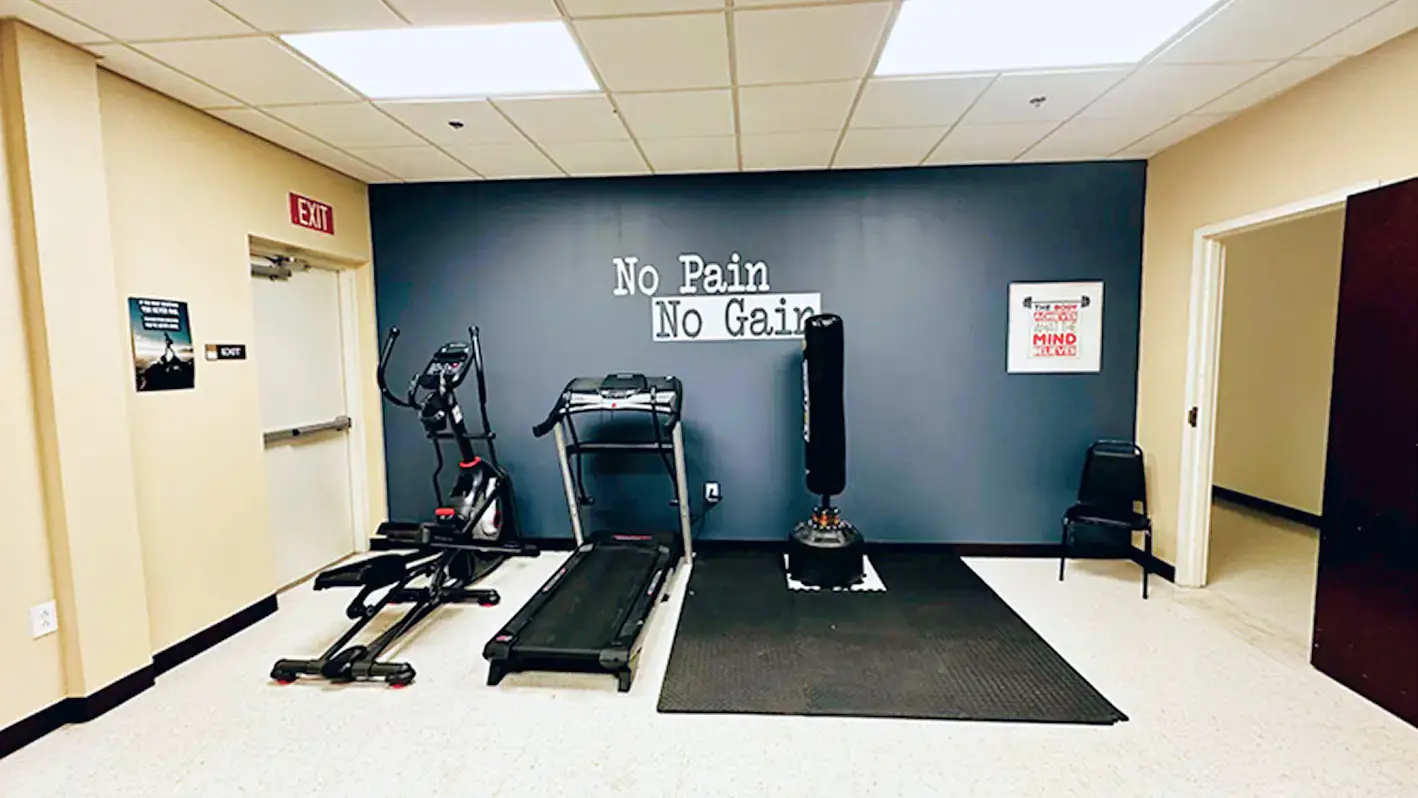
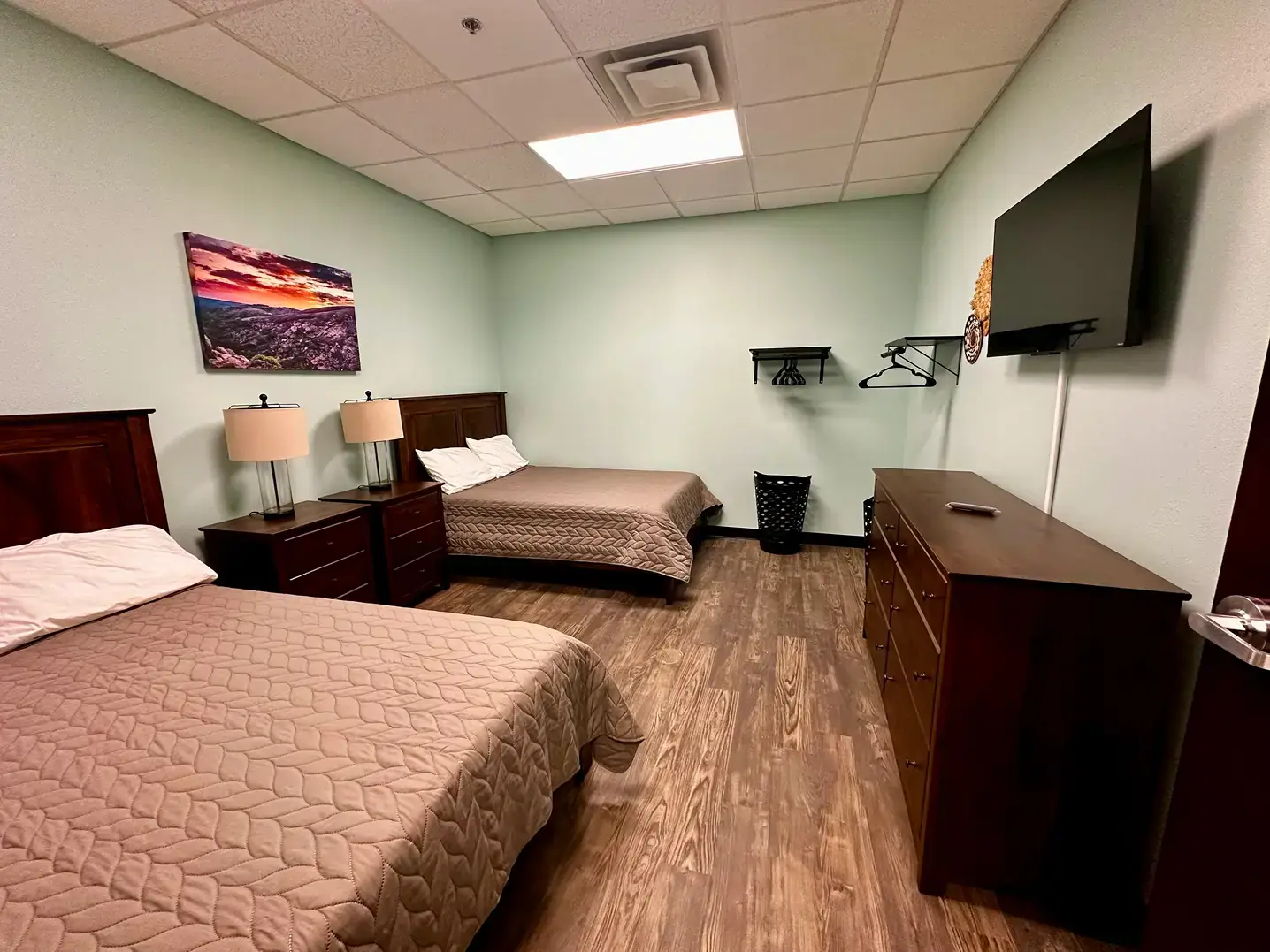
Take a look inside our rehab treatment center in San Marcos, Texas. Our spaces are modern and relaxing, with amenities designed to support you throughout your recovery journey.



Starting therapy can feel intimidating, especially if you have tried to “push through” for a long time. A clear structure helps reduce fear and helps you know what you are walking into.
Most CBT programs include:

A private intake to understand symptoms, triggers, and goals.
A treatment plan that focuses on specific skill-building targets.
Regular sessions with practice between sessions to reinforce new skills.
Progress tracking that helps you see patterns more clearly over time.
CBT is collaborative. You are not being judged. You are being supported while learning a new way to respond to stress and pain.

Speak With Texas Helps Confidentially.
CBT often works best as part of a complete plan. Other therapy options may include DBT, trauma therapy, EMDR therapy, group therapy, family therapy, motivational therapy, and relapse prevention therapy.
Cognitive-Behavioral Therapy (CBT)
Trauma Therapy
CBT can help a wide range of people, including those navigating anxiety, depression, trauma symptoms, and substance use concerns. CBT may be a strong fit if you feel overwhelmed by negative thoughts, stuck in reactive behaviors, or unsure how to handle triggers without spiraling.
CBT can also help family members understand patterns and support healthier communication when family sessions are included.
If you are not sure what you need, a confidential assessment can help clarify the best next step.


Many veterans and first responders carry stress that does not turn off when the shift ends. CBT can help with trauma-related thinking patterns, anxiety, depression, and coping behaviors that may include alcohol or drug use. Care should feel respectful, confidential, and grounded in clinical best practices.
Texas Helps supports people who want real structure, real compassion, and real clinical accountability. Texas Helps also emphasizes quality standards and patient-first communication, which aligns with Google’s guidance to create helpful, reliable, people-first healthcare content.
Texas Helps offers:


Speak With Texas Helps Confidentially.
Cost uncertainty stops people from getting help. Insurance confusion can feel like one more burden when you are already overwhelmed.
Texas Helps can help you:
Verify benefits and explain coverage clearly.
Understand your options based on clinical needs and schedule.
Get next steps without pressure.


I had a truly life‑changing experience at this treatment center. The staff is compassionate, knowledgeable, and genuinely committed to helping each person succeed. From the moment I walked in, I felt supported and understood. The programs are well‑structured, the environment is calming, and the level of care is exceptional. I’m incredibly grateful for the tools and confidence I gained here. Highly recommend to anyone seeking real, meaningful help.
Texas Helps alcohol treatment worked on me. I truly appreciate their staff. They ask questions and actually listen to your responses. I have been to other places where they just write prescriptions and send you on your way. Texas Helps is not like that at all. They really care about all of their visitors. They are always professional, as well as polite. I highly recommend them.
I demonstrate a strong commitment to the values and mission of Texas Helps by consistently providing compassionate, client-centered care. Other staff members approach clients with empathy, patience, and respect, even in high-acuity or challenging situations, which contributed to a therapeutic environment that promotes safety, dignity, and engagement in treatment. I am able to provide holistic care through active collaboration with psychiatry and nursing staff members.
I had a truly life‑changing experience at this treatment center. The staff is compassionate, knowledgeable, and genuinely committed to helping each person succeed. From the moment I walked in, I felt supported and understood. The programs are well‑structured, the environment is calming, and the level of care is exceptional. I’m incredibly grateful for the tools and confidence I gained here. Highly recommend to anyone seeking real, meaningful help.
Texas Helps alcohol treatment worked on me. I truly appreciate their staff. They ask questions and actually listen to your responses. I have been to other places where they just write prescriptions and send you on your way. Texas Helps is not like that at all. They really care about all of their visitors. They are always professional, as well as polite. I highly recommend them.
I demonstrate a strong commitment to the values and mission of Texas Helps by consistently providing compassionate, client-centered care. Other staff members approach clients with empathy, patience, and respect, even in high-acuity or challenging situations, which contributed to a therapeutic environment that promotes safety, dignity, and engagement in treatment. I am able to provide holistic care through active collaboration with psychiatry and nursing staff members.
Evoke wellness saved my life! Today I have 509 days sober and am living my best life. I thought I was too far gone. NO ONE IS TOO FAR GONE! They meet you where you are and love you through it. I owe them everything! My husband and I are now ministry leaders at our local celebrate recovery and would love to come share our testimony of encouragement, strength, and hope to the staff, patients, anyone who will listen!
Starting does not have to be complicated. One call can give you direction and relief.
A simple way to begin:

A cognitive-behavioral therapy program (CBT) helps you understand how thoughts, feelings, and actions all affect each other. CBT focuses on practical skills you can use in real life. It is especially helpful for anxiety, depression, substance use, stress, and relapse prevention.
CBT teaches you to recognize triggers, cravings, and patterns of thinking that lead to substance use. Then you learn how to respond in safer ways. Sessions are often centered on coping skills, problem-solving, relapse prevention, and high-risk planning.
CBT sessions are structured and goal-focused. You may talk through a recent challenge, identify the thoughts behind it, and practice a healthier response. Your therapist may also give you simple skills to practice between sessions.
Yes. CBT helps you work on the patterns that feed worry, fear, avoidance, low mood, and self-criticism. It provides tools to help you challenge automatic thoughts, and take gradual steps to build healthier routines.
Yes. CBT can be used with medication when it fits your needs. Some people benefit from therapy, medication management, or both. A qualified clinician should review your symptoms, health history, and safety needs before recommending medication.
CBT is often structured and goal-based, but the timeline varies. Your plan depends on your symptoms, goals, progress, and level of care. Your clinician can explain what to expect after an assessment.
Coverage depends on your insurance plan, network, and level of care. Verifying your insurance can clarify your benefits, potential costs, and treatment options before starting.
Office Address
Visit our office for in-person support and services.
